







They have a long story in our country, so long that in pre-columbian ceramics there are many evidences of their existence and consumption. You can spell their name as caigua, caihua, or cayhua, although in other countries they are known by different names, like pepino and slipper gourd. 

- ¼ cup vegetable oil
- 1 red onion, chopped
- 2 garlic cloves, chopped
- 1 tablespoon tomato paste or ají panca paste
- 1 pound ground beef
- Salt and pepper
- ⅓ cup raisins
- ⅓ cup black olives, sliced
- 2 hard-boiled eggs, chopped
- 2 tablespoons parsley, chopped
- 12 caiguas
- Sauce
- 2 tablespoons vegetable oil
- 2 garlic cloves, chopped
- ½ cup red onion, chopped
- 2 tomatoes, peeled, seeded and chopped
- 1 cup beef broth or water
- Salt and pepper
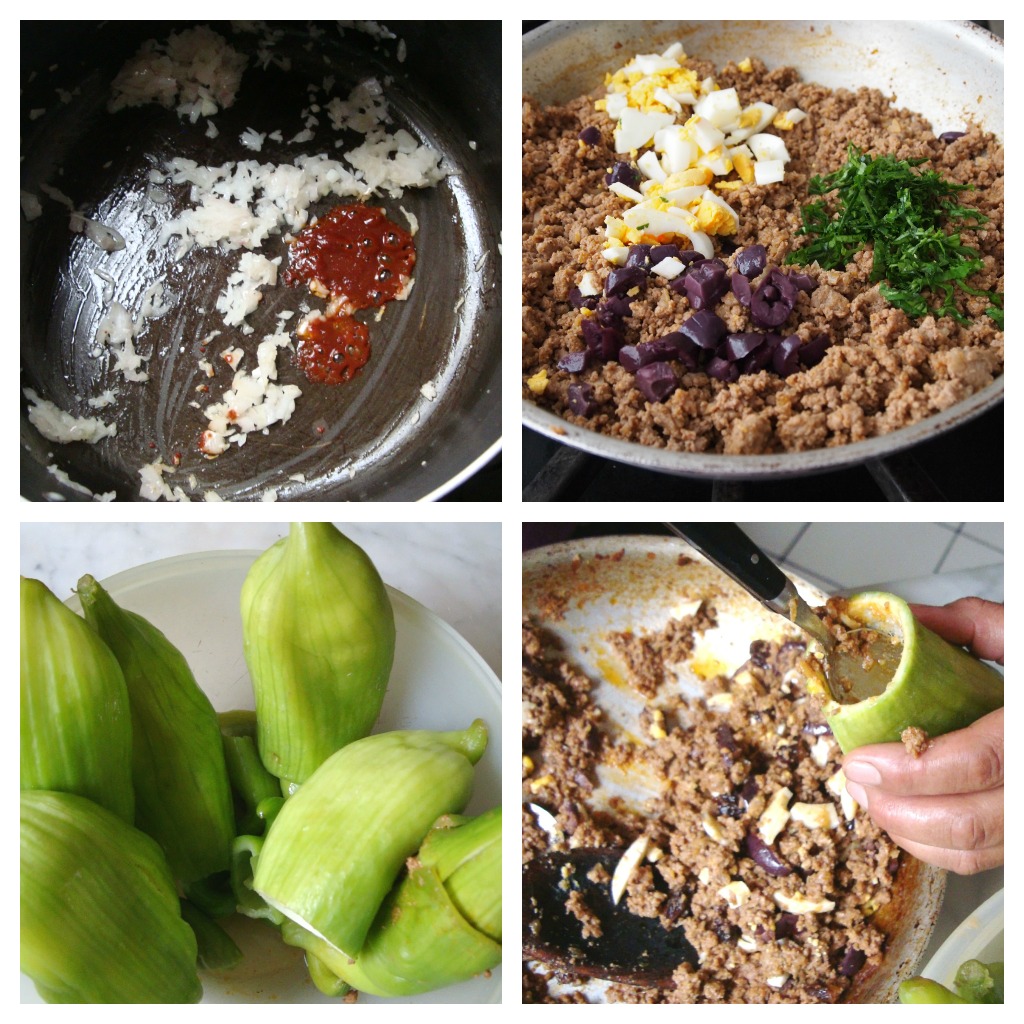
- Heat the oil in a pan over high heat, and sauté the onion and garlic, stirring a couple of times. When the onion is soft and translucent, add tomato paste or ají panca, stir for a few minutes and add the ground beef. Cook for 15 minutes over medium-low heat, stirring every now and then. If the mixture looks dry, add some water to make it moist (about ½ cup).
- Season with salt and pepper and continue cooking for 5 minutes. When ready, add raisins, black olives, hard-boiled eggs, and parsley. Turn off the heat and reserve.
- Wash the caiguas under cool water. Cut the tip of each one reserving them.
- Using a spoon take out the black seeds and veins of each caigua.
- Fill them with the beef mixture, place the reserved tips and place in a plate.
- To make the sauce: in a saucepan heat the oil, add garlic and onion and sauté until tender. Add the chopped tomatoes and cook until very soft. Add the beef broth, salt, and pepper. Place the filled caiguas one next to the other in one layer, cover the pan and cook over medium-low heat for 30 minutes.
- *If you want to thicken the sauce, at this point you may add 2 teaspoons cornstarch dissolved in water, and cook until the sauce looks slightly thick and shiny.
- Serve the caiguas immediately, with white fluffy rice, and some sauce.
- Note: These reheat beautifully, so leftovers are very welcome.
 Peru Delights
Que ricuraaa! Faciles de hacer, apuntando la receta 😉
I live in Canada and am not sure where I might be able to find the caiguas used in the recipe. Is there anything I can use as a substitute?
We know how difficult it is to find caiguas in North America. But you can fill bell peppers, zucchini, or any other vegetable, and follow the recipe. But we think caiguas are unbeatable!
sabe donde puedo conseguir caiguas aca en estados unidos? es lo que mas extrano del Peru!
Hola Stefanie! Qué difícil es conseguir caiguas. A veces tienen congeladas en algunos supermercados de productos latinos.